
whole-family support
Family Counseling in Overland Park, KS
When everyone at home is hurting in a different way, it can feel impossible to find the thread. Family counseling gives you a shared room and a steady guide to find it together.
- ◦ In person in Overland Park
- ◦ Telehealth across Kansas
- ◦ Most insurance accepted

approaches we use
- Family Systems
- Attachment-Based Therapy
- Emotion-Focused Therapy
- DBT Skills
- Art & Expressive Therapy
Does any of this sound like your house?
- 01
Every conversation with your teen seems to end with a slammed door, and you’re no longer sure what started it.
- 02
Your child holds it together at school and then melts down the minute they’re home, and you’re the one absorbing it.
- 03
You and your co-parent agree on almost nothing, and the kids have learned to play the gaps.
- 04
In your blended family the adults are trying hard, but the kids still feel like two households sharing a roof.
- 05
One person’s anxiety, depression, or diagnosis has quietly become the center everyone orbits around.
- 06
Holidays with extended family leave you drained for a week afterward.
- 07
Nobody yells, exactly, but nobody really talks either.
- 08
Since the loss, each of you seems to be grieving alone in a separate room.
Family counseling in Overland Park, KS starts from a simple idea: a family is a living system, and when one part is strained, everyone feels it. A teenager’s withdrawal changes the mood at dinner. A parent’s exhaustion shortens everyone’s fuse. A divorce, a new stepparent, or a sibling’s diagnosis reshuffles who does what and who feels seen. Nobody in the system is the problem, even when one person’s struggle is the most visible.
At Mind & Body Healing Collective, we help families slow the cycle down long enough to understand it. Sessions are not a courtroom, and your therapist is not a referee. Instead, we look at the patterns that keep repeating, the needs underneath the arguments, and the strengths your family already has, so each person can feel heard and the household can settle into a calmer rhythm. Our Overland Park team now includes a licensed marriage and family therapist, a clinician trained specifically in family and couples systems, who sees families, parents, and couples at our Mark One Building office.
We see clients from age 4 and up, and we welcome families in all their forms: two-parent and single-parent homes, blended and stepfamilies, adoptive, foster, and kinship families, multigenerational households, and LGBTQIA+ families. Some come in the middle of a crisis; many come because they can see a pattern forming and want to change course before it sets. Either way, you belong here.
What family counseling really is (and isn’t)
Family counseling is a form of therapy in which the relationships themselves become the focus of care. Instead of sending one struggling child off to be fixed, we look at how everyone’s responses fit together. A child’s anxiety might spike when parents disagree about rules; a parent’s criticism might be a frightened attempt to keep a teen safe. Seeing the loop, rather than blaming a person, is often the first real relief a family feels.
It is not about deciding who is right, and it’s not a place where kids get lectured or parents get judged. Depending on the situation, your therapist may meet with the whole family, with parents alone, with siblings, or with one member individually for part of the work. The configuration serves the goal: helping the family communicate honestly, repair ruptures, and respond to stress in ways that draw people closer rather than pushing them apart.
How we approach family counseling in Overland Park
Our family work is trauma-informed and nervous-system aware. When a family is stuck in conflict, bodies are often in fight, flight, or freeze long before anyone chooses their words. We help each person, including young children, notice what happens inside them when tension rises and learn simple ways to settle before responding. Calmer bodies make for kinder conversations, and the skills practiced in session tend to start showing up at the kitchen table.
We also honor the histories each adult brings. Parents often find themselves repeating, or overcorrecting for, patterns from their own childhoods, and gently exploring those generational threads can soften shame and open new choices. Because our collective offers individual, couples, and psychiatric care, a family member who needs additional support can be connected with another clinician, and with everyone’s consent the providers can coordinate so the family’s care stays aligned.
Often the parents’ relationship sits at the center of the family system. When partners are worn thin, disconnected, or stuck in the same argument about rules and roles, children feel it even if nobody says a word. Our licensed marriage and family therapist can add couples sessions for the adults alongside family work, giving parents a private space to repair their partnership and get on the same page, which tends to steady the whole household.
Approaches that help families reconnect
Your therapist chooses tools based on your family’s ages, needs, and goals. Younger children often do better with play, drawing, or movement than with sitting and talking, while teens may need to feel that their voice genuinely counts before they’ll engage. Our team includes social workers, counselors, and a licensed marriage and family therapist, and together they draw on several approaches:
Many families also benefit from neurodivergent-affirming care. If a child or parent has ADHD or autism, we work with how their brain actually functions instead of expecting them to fit a standard mold, and we help the rest of the family understand and adapt. That shift alone can take the heat out of daily battles over homework, switching between activities, and sensory overwhelm.
- Family systems therapy to map roles, alliances, and repeating cycles
- Attachment-based therapy to rebuild trust and emotional safety between parents and children
- Emotion-focused therapy to help family members name and respond to one another’s deeper feelings
- DBT skills for emotion regulation and distress tolerance, especially helpful for intense teens and the parents who love them
- Art and expressive therapy so children can show what they can’t yet say
- Parent-focused sessions on consistent, connected discipline
Should my child attend every family therapy session?
Not necessarily. Many family therapists begin with a parent-only session to understand the history and the parents’ goals before bringing children in, and it’s common to alternate whole-family sessions with parent-only time. Young children may join for part of a session and then step out while adults talk through harder material. Teens sometimes benefit from a few individual check-ins so they can say what they wouldn’t say in front of everyone.
Your therapist will recommend a structure after the intake and adjust it as you go. A few principles guide us: kids should never be made responsible for adult conflicts, private details of the parents’ relationship stay between the adults, and everyone should leave a session feeling at least a little more understood than when they arrived. If a session gets heated, we slow it down rather than letting it spill into the car ride home.
Family life in Johnson County, and how we fit into it
Families across Overland Park, Olathe, Leawood, and Lenexa often describe a similar pressure: full calendars, high expectations, competitive activities, and very little unstructured time together. Kids feel it in the push to perform; parents feel it in the constant logistics. Family counseling can become one of the few hours in the week when everyone stops moving long enough to actually look at each other.
Our office at 10100 W 87th St, in the Mark One Building, is an easy drive from most of Johnson County. Weekday office hours run from 8 AM to 9 PM, so after-school and after-work appointments may be possible depending on clinician availability. When a family is split across two homes or a parent travels for work, some sessions can happen by secure telehealth so the people who matter can still be in the room.
what to expect
how we'll begin, together
- 1
Reach out on behalf of your family
Any adult in the household can call (785) 615-1995 or send a message. Tell us a little about who lives at home and what’s been hard, and we’ll look for a clinician whose experience fits.
- 2
Start with the grown-ups
The first appointment is often with parents or guardians alone, to review history, concerns, and goals, and to plan how and when to bring children into the room.
- 3
Agree on a family plan
Your therapist proposes a structure, such as whole-family sessions, parent coaching, sibling work, or a mix, along with a few concrete goals every family member can name.
- 4
Practice at home, refine in session
Between visits your family tries small experiments, like a weekly check-in or a new bedtime routine. Sessions review what worked, repair what didn’t, and build from there.
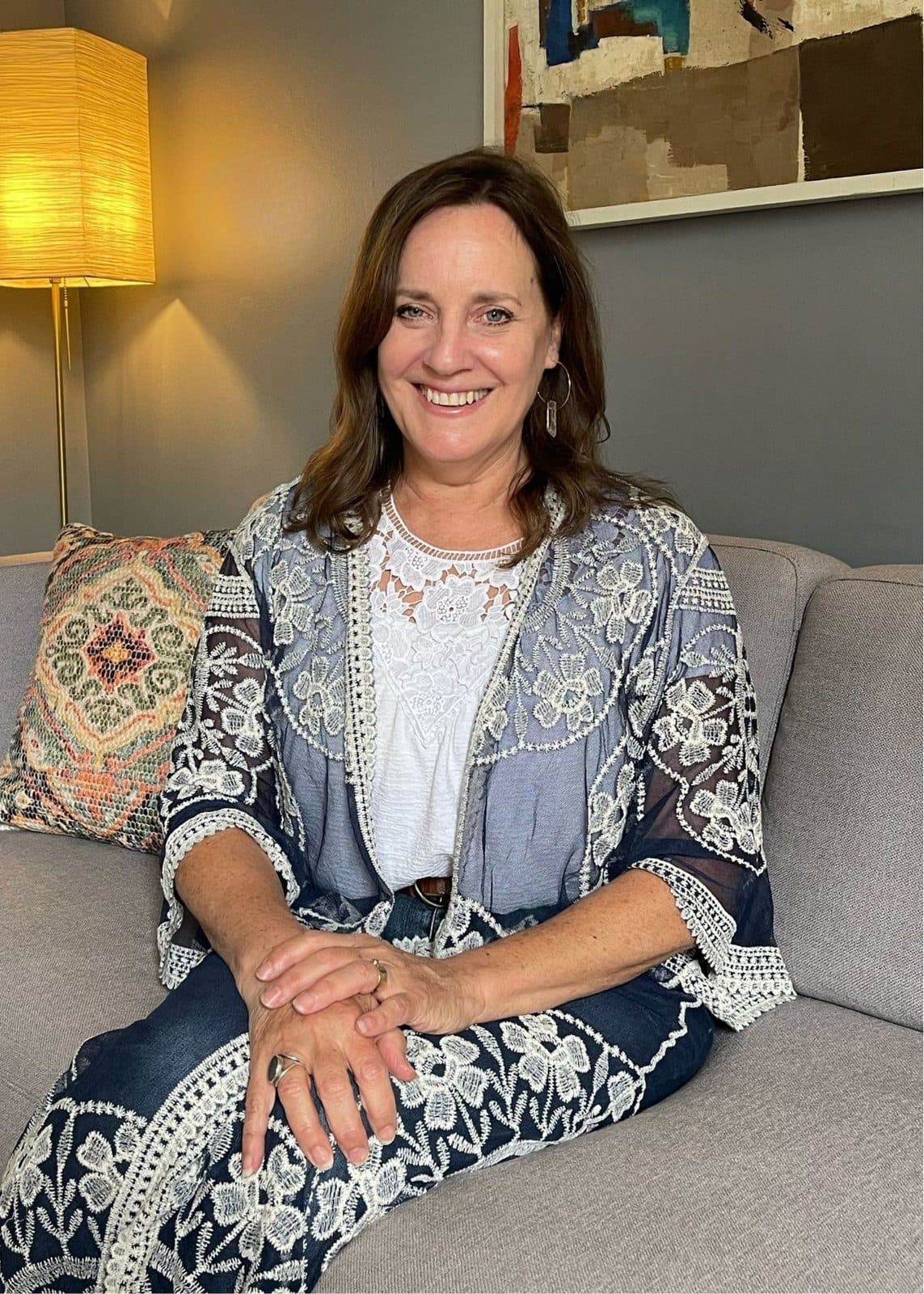
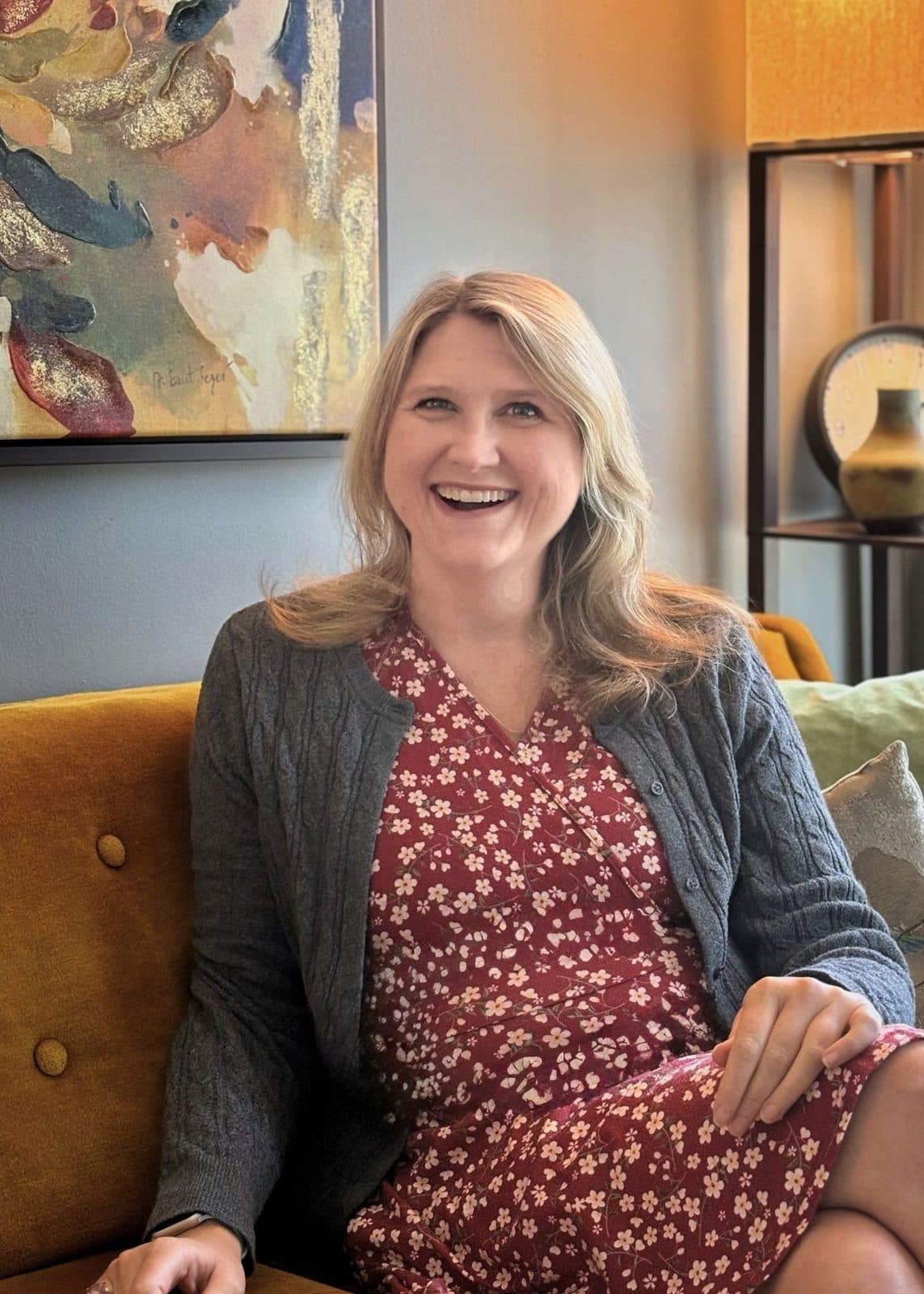
clinicians in overland park
people you might work with


family counseling near you
visiting us in overland park
Families meet with us at our Overland Park office, 10100 W 87th St, Suite 204, in the Mark One Building close to I-35. We regularly welcome households from Olathe, Lenexa, Shawnee, Leawood, and Prairie Village, along with the wider Kansas City metro. For families spread between two homes or schedules that won’t line up, secure telehealth sessions are available throughout Kansas, and some clinicians are licensed in Missouri as well.
Mon–Fri · 8 AM–9 PM · (785) 615-1995
questions
family counseling in overland park, answered
Still wondering about something? Call (785) 615-1995 or send us a note.
How much does family counseling cost in Overland Park?
The first 60-minute intake is $275, and ongoing family sessions are $250 for 60 minutes or $175 for 45. Paying on the day of service earns a 40% prompt-pay discount. We file insurance for you with in-network plans like BCBS KS & KC, Aetna, Cigna, United, Tricare, and KanCare; your copay, coinsurance, or deductible is due at the visit. A Good Faith Estimate is available for self-pay families.
What ages do you work with in family counseling?
We see clients from age 4 and up, so family sessions can include everyone from preschoolers to grandparents. With young children, therapists often use play, art, and movement to help them participate. Teens are given real room to speak, and older relatives can join when multigenerational patterns or caregiving decisions are part of the picture.
What if one family member refuses to come?
That’s common, and it doesn’t mean counseling can’t help. Change in one part of a family system tends to ripple into the rest. We can start with whoever is willing, often one or both parents, and work on how you respond to the reluctant member. Sometimes a teen who refused at first decides to join once they see it isn’t about blaming them.
Do you work with blended families and co-parents in separate homes?
Yes. Blended families and co-parenting arrangements are among the most common reasons families reach out. We can meet with stepparents and biological parents together or separately, help children adjust to life in two households, and focus co-parents on consistent routines. Telehealth can make it easier to include a parent who lives elsewhere in the metro.
Is family counseling right for us if someone has a mental health diagnosis?
Often, yes. When one person lives with anxiety, depression, ADHD, OCD, or another condition, the whole household adapts around it, sometimes in ways that unintentionally keep symptoms going. Family sessions can teach everyone how to support without enabling. If that person also needs individual therapy or psychiatric care, our collective can coordinate with your consent.
How long before we notice a difference at home?
Many families notice small shifts within the first several sessions, like fewer blowups or a calmer bedtime, especially when they practice between visits. Deeper patterns, such as rebuilding trust after a divorce or ending a long parent-teen standoff, usually take longer. Your therapist will revisit goals with you regularly so you can see progress rather than guess at it.
Can parents do couples counseling alongside family sessions?
Yes. Our Overland Park office includes a licensed marriage and family therapist who works with both families and couples, so parents can add couples sessions to the family plan when their own relationship needs attention. Sometimes the same therapist holds both, and sometimes a colleague takes the couples work; either way, with your consent, the clinicians coordinate so everyone is working toward the same goals.
take the first step
you don't have to carry it alone.
Tell us a little about what's going on and we'll match you with a clinician in Overland Park who fits, in person or by telehealth. Most insurance accepted.