
trauma-informed healing
Trauma Counseling at Mind & Body Healing Collective
Trauma is not only what happened to you. It is also what didn’t happen that should have: the comfort, the protection, the steady presence. Whatever you carry makes sense, and it can soften.
- ◦ In person in Lawrence, Overland Park or Topeka
- ◦ Telehealth across Kansas
- ◦ Most insurance accepted

approaches we use
- EMDR
- Brainspotting
- Accelerated Resolution Therapy
- Internal Family Systems
- Somatic Therapy
- Attachment-Based Therapy
Echoes of the past you might notice
- 01
You feel responsible for other people’s moods and scramble to fix tension before it builds.
- 02
Closeness feels good and dangerous at the same time, so you pull back just as a relationship deepens.
- 03
You describe hard parts of your childhood in a flat, matter-of-fact voice, as if they happened to someone else.
- 04
Rest feels unsafe; you are most comfortable when you are busy, useful, or on alert.
- 05
Your harsh inner voice sounds suspiciously like someone from your past.
- 06
You second-guess your own perceptions and struggle to trust what you feel or remember.
- 07
You have survived a lot and still wonder why you can’t just move on.
Trauma counseling at Mind & Body Healing Collective, in Lawrence, Overland Park, Topeka, or by telehealth, is built on a belief our founder, Anissa Pfannenstiel, LSCSW, has held throughout her career: nearly everyone carries some degree of trauma from growing up human. Family dynamics, cultural messages, caregivers who passed along their own unhealed wounds, moments of fear or shame that no one helped you make sense of. These experiences shape how we see ourselves long before we have words for them.
Some trauma is loud and obvious: abuse, assault, a car accident, religious harm, the sudden loss of someone you love. Other trauma is quieter and cumulative, like years of walking on eggshells, being the responsible child in a chaotic house, or learning that your needs were too much. Many people minimize the second kind because nothing “big” happened, yet the body often remembers what the mind has learned to dismiss. Both kinds leave marks, and both deserve care.
Our work is not to make you relive the worst moments of your life. It is to help your mind and body finally register that those moments are over, so you can stop surviving and start living from a place that feels more like you. Along the way, we pay as much attention to your strengths and your capacity for joy as to your wounds, because healing means growing something new, not only tending what hurts.
Complex and developmental trauma: when the wound is a pattern
A single frightening event can overwhelm the nervous system, but many people we see across our offices are carrying something more diffuse: complex or developmental trauma. It grows from repeated experiences, often in childhood, within relationships that were supposed to feel safe. A parent’s unpredictable anger, emotional neglect, chronic criticism, bullying, or growing up around addiction or untreated mental illness can all teach a young nervous system that the world requires constant vigilance.
Because these wounds form while your sense of self is still developing, they rarely feel like trauma. They feel like personality: I’m just anxious, I’m just a people-pleaser, I’m just bad at relationships. Therapy helps separate who you truly are from the adaptations you built to survive. Those adaptations were intelligent. They simply may not be serving you anymore. Naming them with compassion, rather than blaming yourself for them, is often the first real relief.
- Childhood abuse, neglect, or emotionally unavailable caregivers
- Sexual assault and relational or domestic violence
- Religious or spiritual harm
- Medical, accident, or disaster-related trauma
- Identity-based harm, including trauma tied to gender or sexuality
Why trauma lives in the body, and how it can move through
When something is too much to process in the moment, the brain does not file it away neatly as a past memory. Parts of it stay stored as raw sensation, emotion, and readiness to react. That is why a trigger can feel like it is happening now, and why insight alone often isn’t enough. You can understand exactly why you react a certain way and still react. It is also why trauma can surface as headaches, digestive trouble, or tension that never quite lets go.
This is where body-based and brain-based therapies matter. By working with the nervous system directly, through breath, sensation, eye position, bilateral movement, or gentle attention to what happens inside as you remember, therapy can help an old experience finally complete and settle. Many clients describe feeling lighter, more present, or simply less braced, even though the memory itself hasn’t changed. Others notice they can finally rest, or that a familiar trigger no longer lands the way it used to.
Trauma therapies offered by our clinicians
Our team includes therapists trained in several trauma modalities, which lets us match the approach to your history, your nervous system, and your preferences rather than asking you to fit a single method. You don’t need to know which one you want before you arrive. Your therapist will explain the options in plain language, notice what your system responds to, and adjust as you go. EMDR, Accelerated Resolution Therapy, somatic therapy, and expressive art therapy are offered at our Lawrence and Overland Park offices. Here is a brief look at what each involves.
Pacing is everything. We spend time building resources and stability before touching painful material, and you can always pause, slow down, or change course. For people who have tried years of talk therapy without much change, SomaVerse ketamine-assisted psychotherapy is another path. It requires a medical screening, has contraindications such as uncontrolled high blood pressure and psychosis, includes preparation and integration support, and isn’t appropriate for everyone. Your therapist can help you weigh whether it makes sense for you.
- EMDR uses bilateral stimulation, such as side-to-side eye movements or tapping, to help the brain reprocess stuck memories so they lose their emotional charge.
- Brainspotting uses points in your visual field linked to activation in the body to reach experiences held below conscious thought.
- Accelerated Resolution Therapy pairs eye movements with guided imagery to change how distressing images are held, often in relatively few sessions.
- Internal Family Systems helps you meet protective parts and wounded younger parts with compassion rather than judgment.
- Somatic therapy tracks sensation and movement to release survival energy and build a felt sense of safety.
- Attachment-based and expressive therapies help heal relational wounds, including those formed before you had words.
Can you heal from childhood trauma as an adult?
Yes. The nervous system remains capable of change throughout life, and the brain keeps forming new connections well into older adulthood. Healing childhood trauma as an adult doesn’t mean erasing what happened or pretending it didn’t hurt. It means the past stops running the present. Reactions become less automatic, relationships feel safer, and the harsh inner voice loses some of its authority. Your body can learn a kind of safety it never had the chance to learn as a child.
Many adults find this work also changes how they parent, partner, and show up at work, which is why we often describe trauma healing as breaking a cycle rather than only fixing a problem. You are not too old, too far gone, or too complicated for this. You may simply be ready now in a way you weren’t before. Many people also discover a gentler relationship with their younger selves along the way.
Trauma counseling for every age and identity
We see clients from age 4 through older adulthood, and our team brings particular care to people who often feel unseen in traditional settings: LGBTQIA+ clients, neurodivergent people, those in ethically non-monogamous or kink-involved relationships, and anyone whose spiritual life is part of their healing. Spiritual or symbolic practices are woven in only if you want them, never assumed. Whatever your background, you won’t have to educate your therapist about who you are before you can get help.
Our founder’s view is that healing is a return rather than a repair. In her words, “healing is not only possible but part of our nature to want to thrive, not just exist.” That belief shapes how we sit with you, whether you come to one of our offices in Lawrence, Overland Park, or Topeka, or meet by telehealth. We trust that some part of you already knows the way toward wholeness, and our role is to help clear the path.
what to expect
how we'll begin, together
- 1
Make contact
Contact us by phone, text, or email. You don’t have to share your story yet; just tell us you’re looking for trauma support and anything important about scheduling or who you’d feel safest with.
- 2
A gentle intake
Your first 60-minute session focuses on getting to know you and what you need to feel safe in therapy. No one will ask for details of the hardest things before you’re ready.
- 3
Building resources first
Before processing painful memories, you and your therapist strengthen your ability to ground, self-soothe, and return to the present, so deeper work has a steady foundation.
- 4
Processing and reclaiming
With that foundation in place, you’ll work through what still feels unfinished using approaches like EMDR, Brainspotting, or IFS, then carry the changes into how you live, love, and rest.
clinicians across the collective
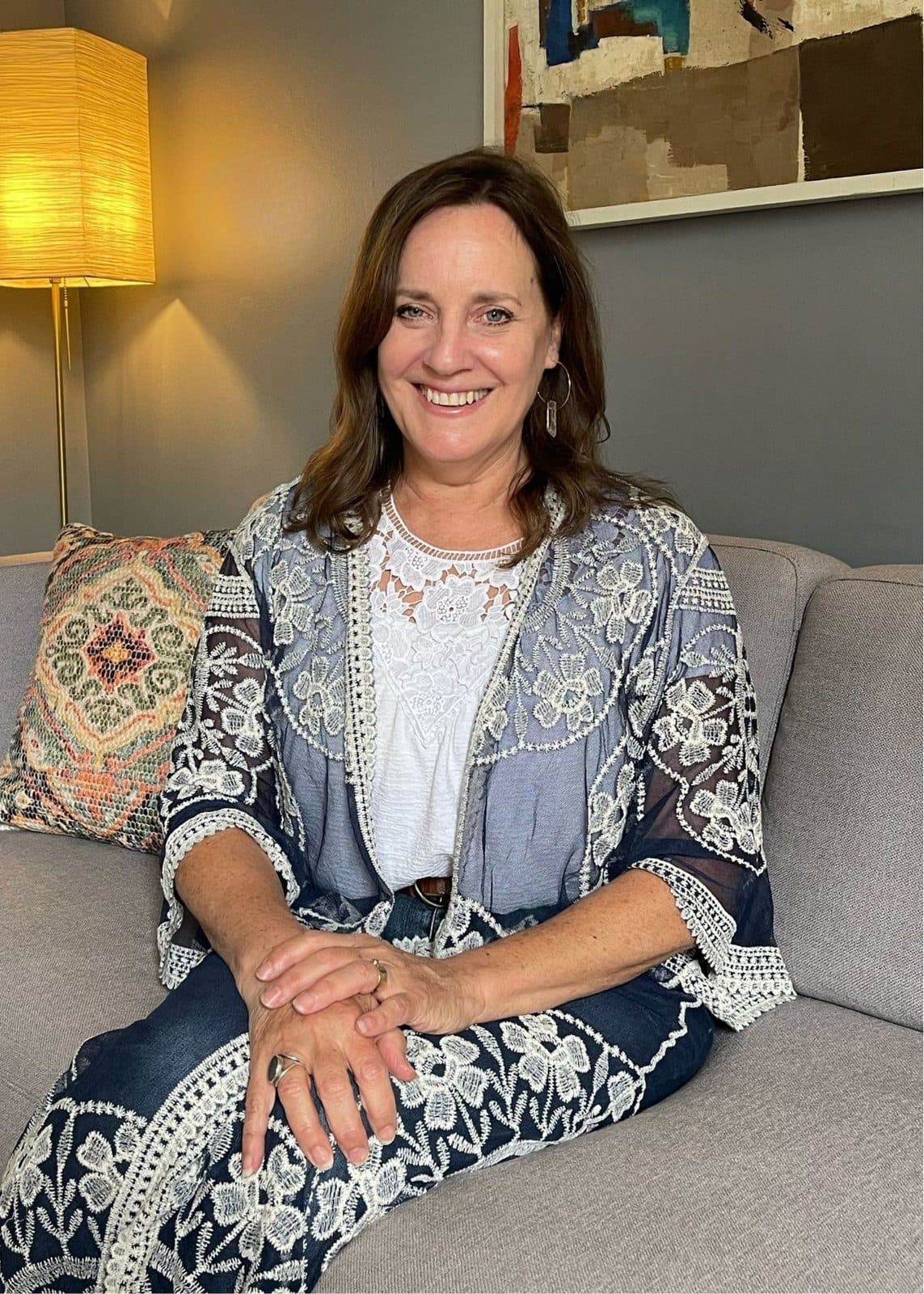
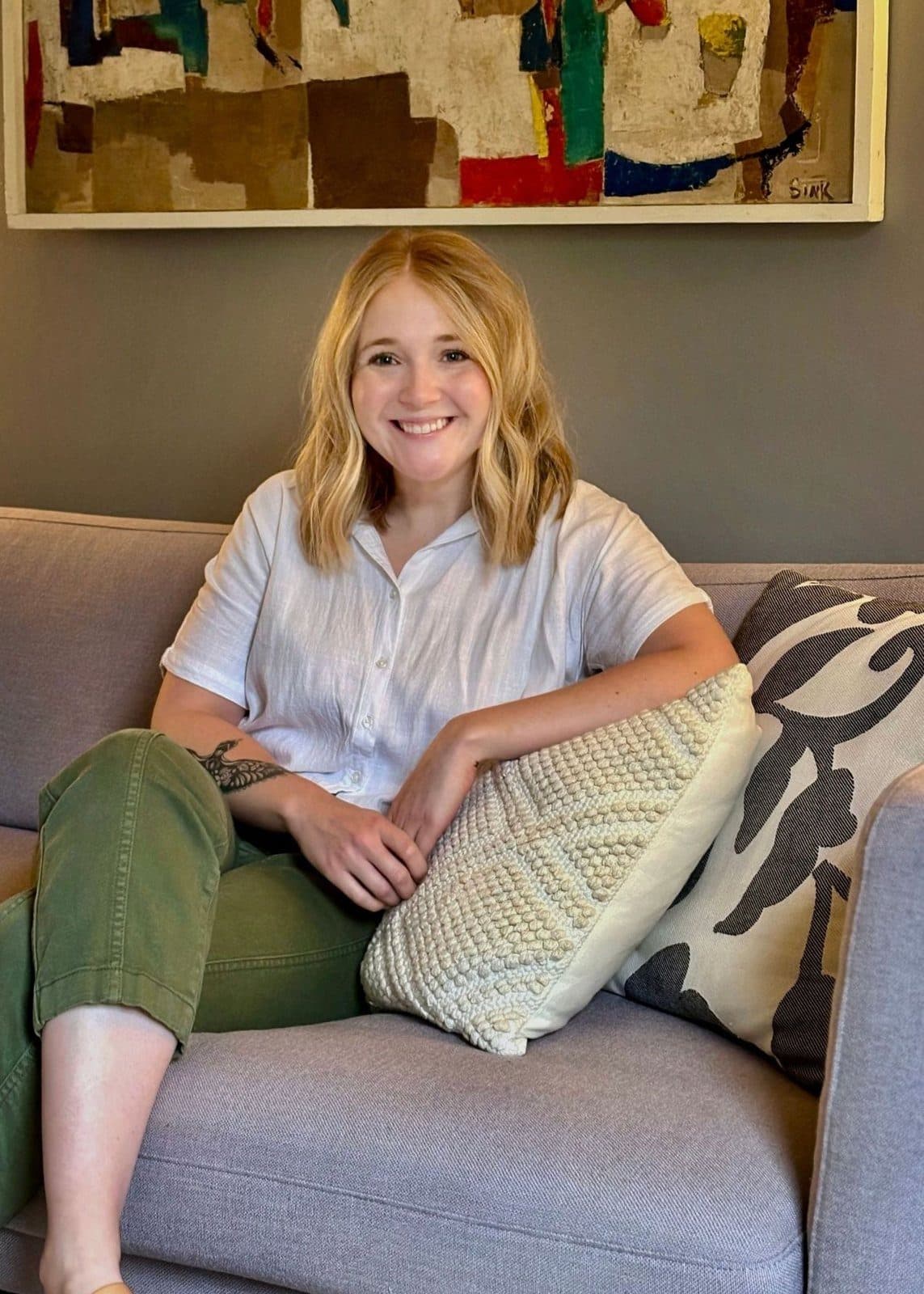
people you might work with


trauma counseling near you
four offices, plus telehealth
Trauma counseling is offered at our headquarters, 2619 W 6th St, Suites A & C, in west Lawrence; at 616 Kentucky St, a quiet house a few blocks from downtown Lawrence; at 10100 W 87th St, Suite 204, in Overland Park; and at 5020 SW 28th St, Suite 204, in Topeka. Clients come to us from Douglas, Johnson, and Shawnee counties and beyond. If a new room feels like too much at first, you can begin with secure telehealth in Kansas, Missouri, Washington, or Florida, depending on clinician licensure, and move to in-person sessions when you’re ready.
Mon–Fri · 8 AM–9 PM · (785) 615-1995
questions
trauma counseling, answered
Still wondering about something? Call (785) 615-1995 or send us a note.
Does insurance cover trauma counseling?
In most cases, yes. We are in network with a wide range of plans, including all Blue Cross Blue Shield networks in Kansas and Kansas City, Aetna, Cigna, United, Humana Medicare, Medicare, KanCare, Sunflower, Healthy Blue, Tricare, and VA plans. We file claims for you, and copays or deductibles are due at each visit. Self-pay clients receive a 40% discount when paying on the day of service.
Do I have to talk about my trauma in detail?
No. Some approaches, like Brainspotting and EMDR, can work with very little verbal detail. Your therapist is more interested in what happens in your body and mind now than in a play-by-play of the past. You decide what to share and when, and “not today” is always an acceptable answer.
What if I don’t think what happened to me was bad enough to count?
This is one of the most common things we hear. Trauma isn’t measured by how dramatic an event looks from the outside, but by how overwhelming it was for your system at the time and how it continues to affect you. If something from your past still shapes how you feel, react, or relate to others, it is worth attention.
How is trauma counseling different from regular talk therapy?
Talk therapy helps you understand your experiences, and that matters. Trauma-focused work adds methods that engage the nervous system and the parts of the brain that store survival memories, so change happens at the level of reaction, not just insight. Many of our clients do both: talking to make meaning, and body-based processing to help that meaning land.
What should I do if I’m in crisis right now?
If you are thinking about harming yourself or feel unsafe, call or text 988 to reach the Suicide & Crisis Lifeline any time, day or night, or call 911 in an emergency. Therapy is not a crisis service, but once you are safe, we are here to help you build steady, ongoing support.

take the first step
you don't have to carry it alone.
Tell us a little about what's going on and we'll match you with a clinician who fits, in person or by telehealth. Most insurance accepted.