
systemic, whole-family care
Marriage and Family Therapy at Mind & Body Healing Collective
When the relationship at the center of a home is hurting, everyone under that roof feels it. Marriage and family therapy helps you tend the partnership and the family that grows around it, all at once.
- ◦ In person in Lawrence, Overland Park or Topeka
- ◦ Telehealth across Kansas
- ◦ Most insurance accepted

approaches we use
- Family Systems
- Attachment-Based Therapy
- Emotion-Focused Therapy
- CBT
- Telehealth
Signs your family system is asking for attention
- 01
Your kids seem to act out most on the days you and your partner are fighting.
- 02
One child has become the family's messenger, peacemaker, or a parent's confidant.
- 03
Stepchildren and stepparents are polite on the surface but tense underneath, and holidays feel like a minefield.
- 04
You and your spouse agree on almost nothing about the kids and have stopped trying to discuss it.
- 05
Grandparents or in-laws hold more sway over your household than feels comfortable.
- 06
Patterns from your own childhood, like yelling, silence, or walking on eggshells, are repeating in your home.
- 07
A remarriage, new baby, or move has scrambled everyone's roles, and nobody knows where they fit.
Marriage and family therapy at Mind & Body Healing Collective, in our Lawrence, Overland Park and Topeka offices and by telehealth, starts from a simple idea: a family is a living system. What happens between two adults ripples out to children, stepchildren, grandparents, and even the family dog. A tense marriage can surface as a child's stomachaches or a teenager's slammed door, while a struggling child can quietly pull parents apart.
Rather than locating the problem in one person, a systemic approach looks at the patterns connecting everyone. Who talks to whom when there's trouble? Who gets blamed, who rescues, and who disappears? These roles usually form for good reasons, but they can outlive their usefulness and keep a family stuck long after the original stress has passed. Seeing them clearly is the beginning of change.
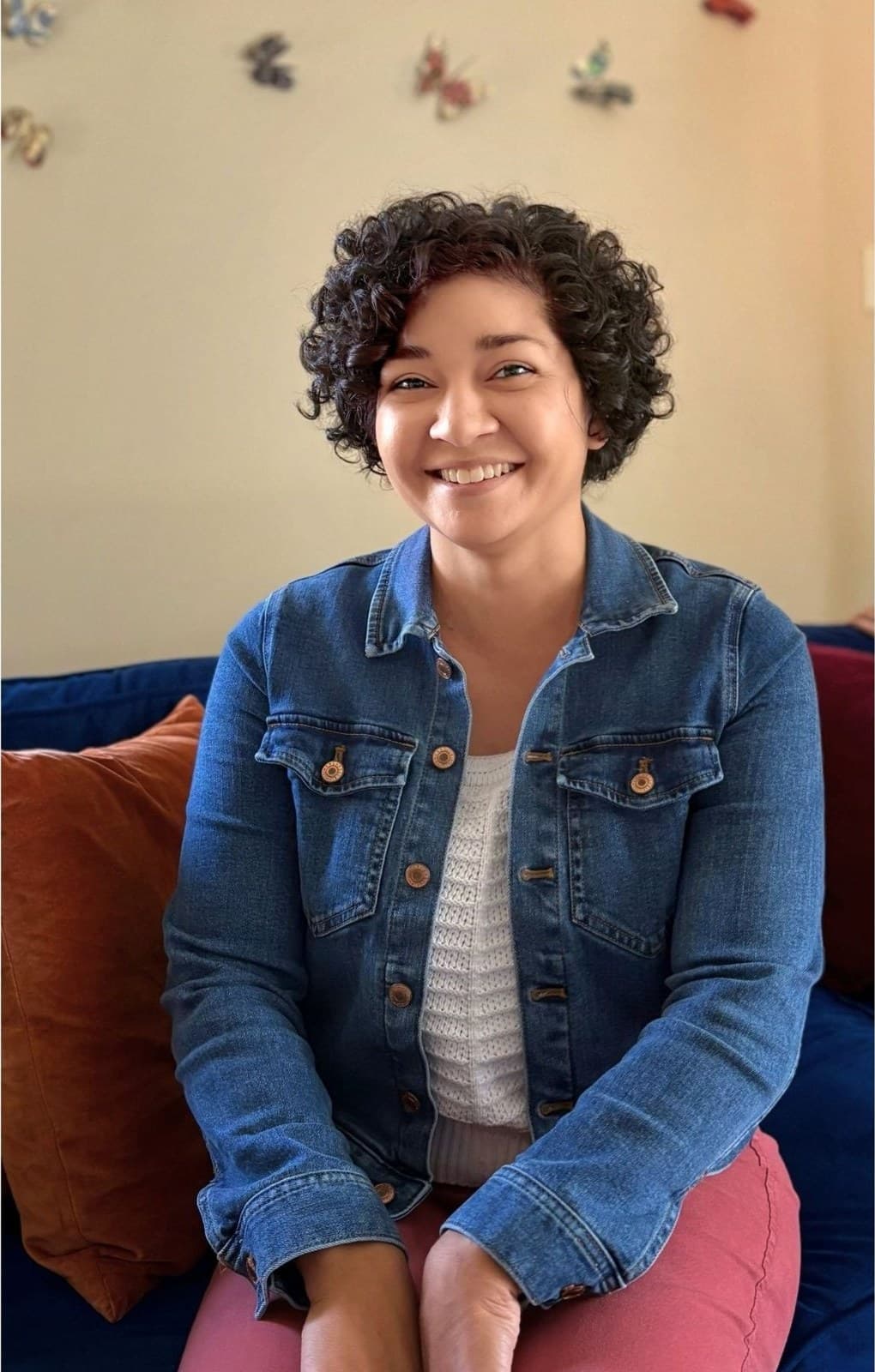
Our team includes a licensed marriage and family therapist (LMFT), our newest clinician, who sees couples and families in Overland Park, alongside social workers and counselors experienced with couples and families across our offices. Together they help you see the bigger picture, then decide thoughtfully who should be in the room, when, and for what purpose, so each session serves both the partnership and the family around it. Everyone's voice matters, including the youngest.
What Makes Marriage and Family Therapy Different
Individual therapy asks what's happening inside you. Couples counseling asks what's happening between two partners. Marriage and family therapy asks both questions and one more: how does everything connect? It is a distinct clinical discipline, rooted in family systems theory, that treats relationships themselves as the client. Therapists trained in this tradition are curious about generations, not just individuals, and they notice how a grandparent's losses or a parent's childhood can echo in a household today. That wider view often explains struggles that seemed random.
That lens changes the conversation. Instead of fixing the 'problem child' or the 'difficult spouse,' we look at the feedback loops everyone participates in. A parent's anxiety may lead to over-control, which sparks a teen's rebellion, which heightens the parent's anxiety. Once the loop is visible, anyone in it can change a step, and the whole dance begins to shift. No one has to carry the full weight of the change.
- Mapping roles, alliances, and triangles across generations
- Tracing how stress travels from the marriage to the kids and back
- Naming family rules no one ever said out loud
- Honoring each person's perspective without assigning blame
- Building new rituals of connection that include everyone
How Your Marriage Shapes the Whole Family
Children are exquisitely tuned to the emotional climate between the adults who care for them. Even very young kids read tension in a jaw or a silence at dinner. When grown-ups don't resolve conflict, children often try to do it for them, by being extra good, extra funny, or troubled enough to unite their parents around a shared worry. These are acts of love, but they're heavy loads for young shoulders.
Strengthening the marriage is therefore one of the kindest things you can do for your children. In our work, the adult partnership gets its own dedicated attention: how you repair, how you share power, and how you support each other under stress. As that foundation steadies, many parents notice their kids relax too, sometimes before the children have attended a single session. Protecting your partnership is not selfish; it's structural.
Can Marriage and Family Therapy Help a Blended Family?
Yes, and stepfamilies are some of the most rewarding systems to work with. Blending a household brings together different histories, loyalties, traditions, and grief over what came before. A child may feel that loving a stepparent betrays a biological parent. A new spouse may feel like an outsider in routines established long before they arrived. Ex-partners, visitation schedules, and different house rules add further complexity. These tensions are normal, not signs that the blend has failed.
We help remarried couples build a strong partnership first, clarify realistic roles for stepparents, and make space for children's mixed feelings. Sessions might include the couple alone, parent-and-child pairs, the full household, or coordination with a co-parent in another home. The goal isn't instant closeness but a family where everyone has a secure place, even if it looks different than a first family did. Patience is part of the plan.
An Integrative, Trauma-Informed Systemic Approach
Families carry stories in their bodies. Generational trauma, migration, addiction, loss, or chronic illness can shape how a household handles conflict for decades. Our clinicians bring a nervous-system-aware perspective, recognizing that a parent who freezes during an argument and a child who explodes may both be responding to the same underlying sense of threat. When adults learn to calm their own bodies first, children borrow that calm. Regulation, in families, is contagious.
Family Systems work sits at the core, supported by attachment-based therapy to strengthen bonds, emotion-focused therapy to soften conflict, and CBT tools for concrete problem-solving. When one family member needs deeper individual healing, such as EMDR for trauma, psychiatric care, or neurodivergent-affirming support, we coordinate within our collective so the pieces fit together instead of operating in isolation. Everyone benefits when the family's care team is actually talking to each other.
Marriage and Family Therapy for Kansas Households
The families we see are wonderfully varied: faculty households near KU and Washburn, Johnson County commuters, farm families on the edges of Douglas and Shawnee counties, military and veteran families, same-sex parents, multigenerational homes, and co-parents shuttling kids between Lawrence, Topeka and Kansas City. We welcome every configuration, including LGBTQIA+ and polyamorous families, and we don't presume what your family should look like. Your definition of family is the one we work with, whatever the official paperwork says.
Because we see clients 4 years old and up, younger children can join sessions in developmentally appropriate ways, often through play, art, or movement rather than long conversations. Family sessions take place at our offices in Lawrence, Overland Park and Topeka, and telehealth can bring in a college-age child studying elsewhere or a co-parent who lives in another town. Evening appointments during our weekday hours can help working parents gather everyone after school.
what to expect
how we'll begin, together
- 1
Tell us about your family
Call or email and share who lives in your home, who else is involved, and what's been hardest. You don't need to have the whole story organized.
- 2
A systemic assessment
Early sessions often begin with the couple, then widen to include children or other relatives. We map relationships, stressors, and strengths across the family.
- 3
Decide who meets, and when
Your plan may combine couple sessions, family sessions, and individual support. We explain the purpose of each format so nobody feels singled out.
- 4
Practice new patterns at home
Change happens in kitchens and car rides, not just in our office. We offer small, doable experiments and adjust as the family system responds.
clinicians across the collective
people you might work with



marriage & family counseling near you
four offices, plus telehealth
Marriage and family therapy sessions take place at four Kansas offices: our Lawrence headquarters, 2619 W 6th St, Suites A & C; 616 Kentucky St, a quiet house a few blocks from downtown Lawrence; 10100 W 87th St, Suite 204, in Overland Park's Mark One Building, home base for our newest LMFT; and 5020 SW 28th St, Suite 204, in Topeka. Secure telehealth across Kansas, Missouri, Washington and Florida, depending on clinician licensure, lets relatives living elsewhere join the conversation.
Mon–Fri · 8 AM–9 PM · (785) 615-1995
questions
marriage & family counseling, answered
Still wondering about something? Call (785) 615-1995 or send us a note.
What is a licensed marriage and family therapist (LMFT)?
An LMFT is a mental health professional trained specifically to treat individuals, couples, and families through a relational lens, with graduate education focused on family systems, development, and relationship dynamics. Our collective includes LMFTs, among them our newest, who works with couples and families in Overland Park, as well as social workers and counselors experienced in couples and family work across our offices, and we'll help match you with the clinician whose background fits your family.
Does insurance cover marriage and family therapy?
Coverage depends on your plan and on whether treatment addresses a diagnosed condition for someone in the family. We're in-network with many insurers, including BCBS, Aetna, Cigna, United, Tricare, and VA/Veterans plans, which can matter for military families. We file claims for you. Self-pay families receive a 40% discount when paying on the day of service, and a Good Faith Estimate is available.
Do all family members have to attend every session?
No. Part of systemic work is deciding who should be present for a given conversation. Some sessions include only the parents, others add the kids, and some focus on a single relationship within the family. Even if someone refuses to come, change in the people who do attend can still shift the whole system.
How is this different from family counseling?
The two overlap, but marriage and family therapy places particular emphasis on the couple relationship as the family's anchor. We look closely at how the adults' partnership affects parenting, sibling dynamics, and the household climate, and we often work directly on the marriage as part of helping the kids. Family counseling may center more on a child's specific struggle or an acute family crisis.
Can you help if my ex and I share custody?
Yes. Co-parenting across two homes brings its own stresses, and children benefit when parents coordinate respectfully. We can work with you and a new partner, help you communicate more effectively with your co-parent, and, when it's safe and appropriate, include both households in select sessions focused on the kids' needs.
take the first step
you don't have to carry it alone.
Tell us a little about what's going on and we'll match you with a clinician who fits, in person or by telehealth. Most insurance accepted.