
calm for a busy mind
Anxiety Therapy in Overland Park, KS, for Minds That Won’t Switch Off
If your mind is running through the next ten things while you’re still doing this one, you’re not weak or dramatic. Your nervous system has been working overtime, and it can learn to stand down.
- ◦ In person in Overland Park
- ◦ Telehealth across Kansas
- ◦ Most insurance accepted

You might recognize yourself here
- 01
You check your phone, the weather, and three group chats before your feet hit the floor.
- 02
You leave early for everything because running late feels unbearable.
- 03
You replay a comment from a meeting for days, sure you said the wrong thing.
- 04
Your jaw aches, your shoulders live near your ears, and headaches arrive by mid-afternoon.
- 05
You avoid highway merges, crowded stores, or phone calls, and your world has quietly shrunk.
- 06
You wake at 3 AM with your mind already sprinting through tomorrow.
- 07
Reassurance helps for about an hour, and then the worry comes back.
- 08
Your child melts down before school, and you recognize something of yourself in it.
Anxiety rarely looks the way people expect. In Johnson County, it often looks like competence: the parent with every practice on the shared calendar, the manager answering emails at 11 PM, the student with a perfect GPA and a stomach that hurts every Sunday night. Anxiety therapy in Overland Park, KS, at Mind & Body Healing Collective is for the person underneath the performance, the one who’s tired of bracing for things that haven’t happened.
Anxiety forms when your nervous system learns, through stress, trauma, or long stretches of uncertainty, to stay on alert even when nothing is wrong. That’s why logic alone rarely fixes it. You can know the meeting will be fine and still feel your heart pounding. Effective care works on both levels: the thoughts that feed the worry and the body that keeps sounding the alarm.
Our therapists help children, teens, and adults understand where their anxiety comes from, what keeps it going, and how to respond to it differently. The goal isn’t to never feel anxious again. It’s to spend far less of your life ruled by it, and more of it actually present for the people and moments you care about. Relief usually comes in layers, and each one counts.
Why Anxiety Keeps Coming Back
Anxiety sustains itself through loops. A worry shows up, your body tenses, and you do something to feel safer: you avoid, over-prepare, seek reassurance, or try to control the outcome. It works, briefly. But each time, your brain files away the lesson that the threat was real and that you only got through because you took action. Next time, the alarm rings a little faster and a little louder. Avoidance feels like protection, but it quietly teaches the alarm to stay on.
Other patterns feed the loop, too: perfectionism, people-pleasing, rumination, and staying so busy there’s no room to feel anything. Unresolved trauma can keep the system primed as well, making ordinary moments register as dangerous. Understanding your particular loop is the first step in anxiety therapy, because once you can see it clearly, you can start to interrupt it. Your therapist will help you trace it using real examples from your week, not abstract theory.
- Avoiding situations that spike your anxiety
- Over-planning and rechecking to prevent mistakes
- Seeking reassurance from partners, friends, or search engines
- Replaying and rehearsing conversations
- Saying yes to avoid disappointing anyone
- Numbing out with screens, work, or substances
How Our Overland Park Anxiety Therapists Work
We start by getting curious about your anxiety rather than rushing to eliminate it. When did it begin? What sets it off? What does it feel like in your body? From there, your therapist builds a plan with more than one way in. CBT helps you notice and question thoughts that predict catastrophe. DBT skills and mindfulness give you ways to tolerate discomfort without reacting. Somatic practices such as breath, grounding, and orienting to the room teach your body it’s safe to settle.
When anxiety is rooted in past experiences, we can go deeper. EMDR, Brainspotting, and Accelerated Resolution Therapy help the brain process memories that keep the alarm set on high, often without talking through every detail. Some clients also explore hypnotherapy or Internal Family Systems to understand the anxious part of them that believes it has to stay on guard. Your plan evolves as you do; what helps in month one may look different from what helps in month six.
Can Anxiety Be Treated Without Medication?
For many people, yes. Therapy alone can meaningfully reduce anxiety, especially when it combines skills for the present with processing of what came before. The tools you practice in session, like slowing your exhale or catching a spiral early, travel with you: onto I-435 at rush hour, into the school pickup line, or into a tense performance review. With practice, the pause between trigger and reaction grows, and that pause is where choice lives.
That said, medication can be a helpful support, particularly when anxiety is severe enough that using new skills feels impossible. A psychiatric nurse practitioner is part of our team and holds appointments at this Overland Park office, so you can explore medication without starting over somewhere unfamiliar. The decision is always yours. Some clients use medication for a season while therapy builds longer-term change, then revisit the question with their prescriber.
Anxiety Support for Kids, Teens, and Adults
Anxiety shows up differently across ages. Young children may complain of stomachaches, cling at drop-off, or melt down over small changes in routine. Teens often carry it quietly, in sleep problems, irritability, or the pressure to keep up academically and socially. Adults may notice it as burnout, insomnia, snapping at the people they love, or a constant low hum of dread that follows them from room to room. Older adults may feel it around health, finances, or losing independence.
Our clinicians work with every age from four upward, and with younger children we involve caregivers so the skills practiced in session carry into home and school. Our team is LGBTQIA+ affirming and neurodivergent-affirming. Anxiety often travels with ADHD or autism, or with the strain of moving through the world as someone who doesn’t fit the default, and your therapist will take that context seriously. You won’t have to explain why ordinary settings can feel so draining.
When the Pace of the Kansas City Suburbs Feeds Your Anxiety
There’s a particular kind of pressure in a high-achieving suburban setting. Schedules are full, expectations run high, and it can seem as if everyone else is managing just fine. Anxious people in Overland Park, Leawood, and Olathe often tell themselves they don’t have time to slow down, which is frequently the very reason the anxiety keeps building. Needing help doesn’t mean you’re falling behind; it usually means you’ve been carrying too much for too long.
Therapy close to home makes slowing down a bit more doable. Our office at 10100 W 87th St sits just off I-35, and weekday office hours run until 9 PM. If even that drive feels like too much right now, or if anxiety makes leaving the house hard, you can begin with telehealth and move to in-person sessions when you’re ready. For some people, simply having a standing appointment on the calendar lowers the background hum.
what to expect
how we'll begin, together
- 1
Make the first move
Call, email, or request an appointment online. If phone calls spike your anxiety, an email works just as well.
- 2
Map your anxiety
In your intake, your therapist asks about triggers, body symptoms, history, and what you’ve already tried, so nothing is guesswork.
- 3
Build your toolkit
Early sessions focus on skills that bring relief sooner: grounding, breath, thought-checking, and ways to ride out a spike.
- 4
Address the roots
As you steady, you can work on the experiences and beliefs underneath, using approaches like EMDR or parts work.
clinicians in overland park
people you might work with

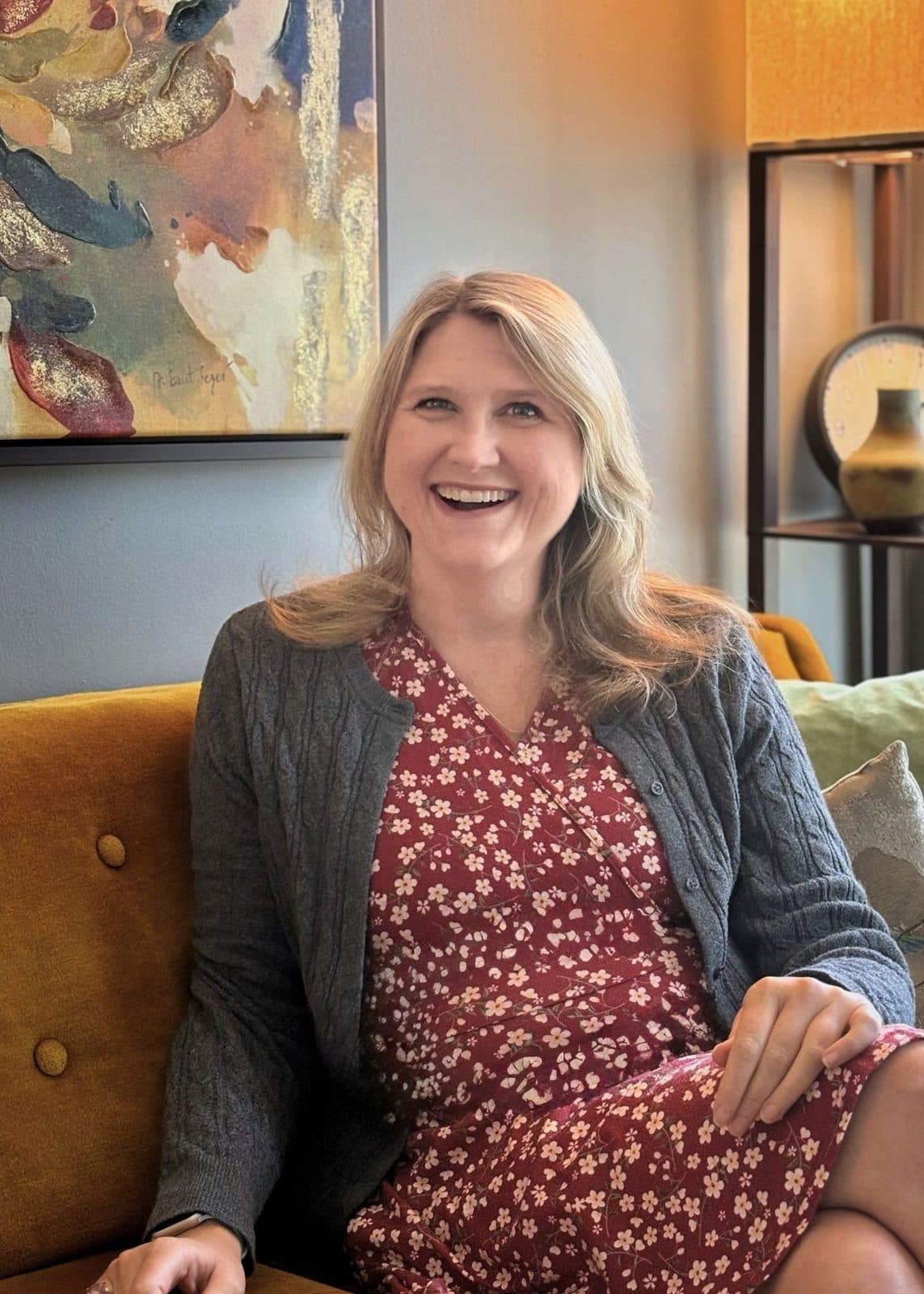


anxiety therapy near you
visiting us in overland park
Anxiety therapy is available at our Overland Park office, 10100 W 87th St, Suite 204, Overland Park, KS 66212, in the Mark One Building close to I-35 and 87th Street Parkway. We work with clients from Leawood, Lenexa, Prairie Village, Mission, and across Johnson County. If getting to an office is hard right now, telehealth is available statewide in Kansas, so you can begin from wherever you feel most at ease.
Mon–Fri · 8 AM–9 PM · (785) 615-1995
questions
anxiety therapy in overland park, answered
Still wondering about something? Call (785) 615-1995 or send us a note.
Do you take insurance for anxiety therapy in Overland Park?
Most likely. We’re in network with BCBS of Kansas and Kansas City, Aetna, Cigna, United, UMR, Ambetter, Tricare, Medicare, and several KanCare plans, among others. We handle the claim; any copay, coinsurance, or deductible is due at your appointment. If you’d rather pay privately, same-day payment qualifies for a 40% prompt-pay discount.
How soon will I feel less anxious?
Many clients notice some relief within the first several sessions, often because they’ve found one or two skills that work for them and feel less alone with the problem. Deeper change, like fewer spikes, less avoidance, and a quieter baseline, takes longer and depends on how long anxiety has been part of your life. Your therapist will check progress with you regularly.
What’s the difference between everyday stress and an anxiety disorder?
Stress is usually tied to a specific pressure and eases once that pressure lifts. Anxiety tends to linger, or appear even when things are going well, and it often brings physical symptoms and avoidance. You don’t need to know which one you’re dealing with before reaching out; either is a valid reason to get support.
Can therapy help with panic attacks?
Yes. Panic attacks are frightening, and people sometimes end up in urgent care convinced something is medically wrong. Once a medical provider has ruled out physical causes, therapy can help you understand the panic cycle, reduce your fear of the sensations themselves, and practice responses that shorten or prevent attacks. Many clients find panic loses much of its power once it’s understood.
Will I be involved in my child’s anxiety therapy?
It depends on your child’s age and needs. With younger kids, caregivers are usually part of the process so you can reinforce new skills at home. Teens often benefit from more private space, with periodic check-ins for parents. Your child’s therapist will explain how involvement works and how confidentiality is handled for minors.

take the first step
you don't have to carry it alone.
Tell us a little about what's going on and we'll match you with a clinician in Overland Park who fits, in person or by telehealth. Most insurance accepted.