
queer-affirming identity work
LGBTQIA+ Therapy in Topeka, KS
You shouldn’t have to explain your pronouns, defend your relationships or educate your therapist before you can get help. Here, who you are is the starting point, not the problem.
- ◦ In person in Topeka
- ◦ Telehealth across Kansas
- ◦ Most insurance accepted

approaches we use
- LGBTQIA+ Affirming Therapy
- Internal Family Systems
- CBT
- DBT Skills
- Existential Therapy
- Telehealth
You might be looking for this kind of space if…
- 01
You’re questioning your sexuality or gender, and there’s no one you trust enough to think out loud with.
- 02
You’ve come out to some people but not others, and keeping track of who knows is exhausting.
- 03
Family holidays mean editing yourself for days ahead of time.
- 04
Faith has been a source of both belonging and deep hurt, and you’re not sure what to keep.
- 05
You’re transitioning, or considering it, and want support that feels collaborative rather than like a test you have to pass.
- 06
Old messages about who you were supposed to be still show up as shame, even though you know better.
- 07
You want help with anxiety, depression or relationships from a therapist who already understands your world.
LGBTQIA+ therapy in Topeka, KS at Mind & Body Healing Collective is grounded in a simple understanding: queer and trans lives are not problems to be solved. Our Topeka team includes an LGBTQIA+ specialist whose work centers on identity, and our whole collective is affirming of every sexual orientation, gender identity and relationship structure. You can bring all of yourself into the room, and you won’t be asked to shrink any part of it.
People come to LGBTQIA+ therapy for many reasons. Some are exploring questions about sexuality or gender for the first time. Some are navigating coming out to family, a faith community or coworkers. Others are dealing with anxiety, depression or trauma that has little to do with being queer, and simply want a therapist who won’t make their identity the issue. All of these are good reasons to reach out.
Living as an LGBTQIA+ person in Kansas’s capital city can mean finding real community and also bracing for rejection in places that should feel safe. Therapy offers a steady space to sort through both, at your own pace, with someone clearly on your side.
What queer-affirming therapy actually looks like
Affirming therapy goes beyond tolerance. It means your therapist understands LGBTQIA+ identities, uses your name and pronouns, recognizes the real effects of discrimination, and doesn’t treat your orientation or gender as the cause of your struggles. It also means respecting the full range of how people live and love, including asexual and aromantic people, bisexual and pansexual folks, nonbinary and trans people, intersex people, and those in ethically non-monogamous or kink-involved relationships.
Just as important, affirming therapy doesn’t assume what your identity means to you. Some clients want to talk about being queer every week. Others want to focus on work stress or grief and only mention their partner in passing. Your therapist follows your lead, staying curious rather than filling in the blanks with assumptions.
Identity work: exploring who you are without pressure
Identity work is at the heart of our Topeka practice. It can mean exploring sexuality or gender, and it also includes how those parts of you intersect with race, culture, faith, disability, neurodivergence, family history and class. Many people arrive having spent years shaping themselves around other people’s expectations. Therapy gives you room to ask what actually fits, and to tolerate not knowing yet.
There is no destination you’re supposed to reach. Some people leave with a clear new label; others find that labels matter less than they expected. Your therapist won’t push you in any direction. The goal is self-understanding and self-acceptance, so that the choices you make about how you live, who you tell and how you present come from you.
- Questioning sexual orientation or gender identity
- Coming out, and deciding when, how and to whom
- Gender exploration and support around transition decisions
- Religious trauma and reconciling faith with identity
- Relationships, dating and chosen family
- Discrimination, minority stress and internalized shame
Minority stress, trauma and the toll of always being on guard
Even in supportive circles, many LGBTQIA+ people live with a constant background question: is it safe to be myself here? That chronic vigilance, often called minority stress, can show up as anxiety, depression, exhaustion, substance use or difficulty trusting others. When there’s also a history of rejection, bullying, attempts to change who you are, or violence, it can look a lot like trauma, because it is.
Our Topeka clinicians are trained in trauma-informed care and draw on approaches like CBT, DBT skills and Internal Family Systems to help you untangle internalized shame from who you actually are. IFS can be especially meaningful here: many people discover a protective part that learned to hide, and a younger part still waiting to be accepted. Meeting both with compassion can soften shame in ways that logic alone rarely does.
Relationships, family and finding community
Many LGBTQIA+ clients come to therapy wanting to feel more at home in their relationships: with partners, with families of origin, and with the chosen family that often becomes just as important. Therapy can help you set boundaries with relatives who aren’t ready to accept you, repair relationships with those who are trying, and grieve the connections that may not survive your honesty.
It can also help you build something new. Finding community in Topeka, whether through friends, faith spaces that welcome you, or groups around shared interests, can take courage, especially if past experiences taught you to keep people at a distance. Your therapist can help you notice what gets in the way of connection and take small, manageable steps toward the support you deserve.
Support for LGBTQIA+ teens and their families
We see clients from age 4 up, and LGBTQIA+ teens deserve a confidential space where they can talk honestly about identity, friendships, dating, school and online life. Our clinicians respect teens’ privacy within appropriate safety limits and never treat a young person’s identity as a phase to be managed.
Parents are welcome too. Some are fully supportive and want to know how to help. Others are still catching up, carrying worry, confusion or grief they don’t want to put on their child. Parent sessions can be a place to work through those feelings so you can show up for your kid. Our Topeka office also has two autism specialists, which matters for the many neurodivergent young people who are also exploring gender or sexuality.
what to expect
how we'll begin, together
- 1
Reach out in your own words
Call (785) 615-1995 or send the request form. Share your name and pronouns upfront, along with anything else you’d like us to know.
- 2
Match with an affirming clinician
We suggest a Topeka therapist based on your goals and preferences, including our LGBTQIA+ specialist when identity work is your focus.
- 3
Settle in and set the agenda
Early sessions are about getting to know you. You decide what matters most, whether that’s identity, relationships, family or something else entirely.
- 4
Grow at your own pace
Therapy evolves with you, from coming out or transitioning to building relationships and a life that feels like yours.
clinicians in topeka
people you might work with


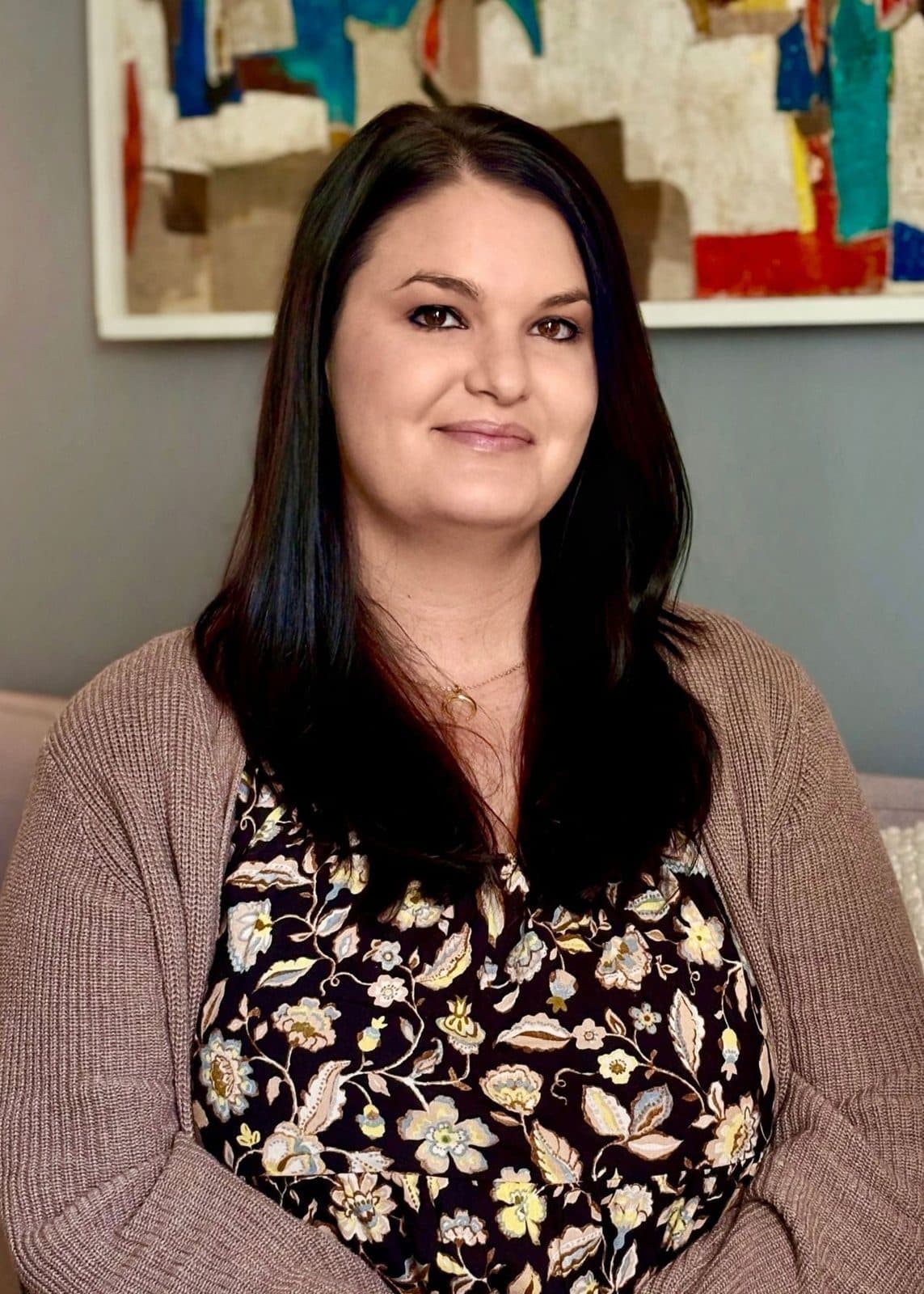

lgbtqia+ therapy near you
visiting us in topeka
LGBTQIA+ therapy is offered at our Topeka office, 5020 SW 28th St, Suite 204, Topeka, KS 66604, in southwest Topeka near I-470. We welcome clients from across Shawnee County, including the Washburn University community and neighbors in Auburn, Silver Lake, Rossville and Tecumseh. If privacy in a smaller town is a concern, secure telehealth is available anywhere in Kansas, so you can meet from a space where you feel safe.
Mon–Fri · 8 AM–9 PM · (785) 615-1995
questions
lgbtqia+ therapy in topeka, answered
Still wondering about something? Call (785) 615-1995 or send us a note.
Do I have to be out to start LGBTQIA+ therapy?
Not at all. Many clients are still questioning, out to only a few people, or not out to anyone. Therapy is confidential, and you decide what you share and when. Your therapist will never pressure you to come out or adopt a label before you’re ready.
Is your whole practice LGBTQIA+ affirming?
Yes. Every clinician at Mind & Body Healing Collective is expected to provide affirming care, and our Topeka office also includes an LGBTQIA+ specialist whose work focuses on identity. If you’d like a clinician who shares part of your identity, let us know when you call and we’ll do our best to match you.
Can you help with gender transition?
Our therapists can support you through gender exploration, social transition, family conversations and decisions about medical transition, at whatever pace feels right. If you need a letter or documentation for a specific provider, ask about it at intake so we can talk through what that process looks like for you.
Does insurance cover LGBTQIA+ therapy in Topeka?
Yes, in most cases. We’re in network with all Blue Cross Blue Shield networks, Aetna, Cigna, United, UMR, Ambetter, Medicare, Tricare, VA/Veterans plans and KanCare plans, and we file claims for you. Self-pay sessions are $250 for 60 minutes, $175 for 45 minutes and $125 for 30 minutes, with a 40% discount for payment on the day of service.
What if I’m struggling and need support right away?
Call or text 988 any time to reach the Suicide & Crisis Lifeline, or call 911 if you’re in immediate danger. LGBTQIA+ young people can also reach The Trevor Project 24/7 at 1-866-488-7386. Once you’re safe, we’d be glad to help you find ongoing support.

take the first step
you don't have to carry it alone.
Tell us a little about what's going on and we'll match you with a clinician in Topeka who fits, in person or by telehealth. Most insurance accepted.